
More Uptime Is Only Part of the Payoff
Extend expertise where it’s critical
Your team knows your machines. Critical asset monitoring adds continuous visibility into changes that aren’t apparent during everyday operation. Augury’s Reliability Expert pairs AI diagnostics with certified analyst review and agentic capabilities to help your team assess developing faults, coordinate repairs, and keep production on plan.
Connect every critical rotating asset to prescriptive diagnostics
Get continuous monitoring of your critical rotating assets, with electrical and mechanical fault diagnostics and recommended actions delivered to your team. Reliability Expert combines AI with certified analyst review, so your team can put the findings to work without taking on more data collection and analysis.
More coverage. More time to plan.
Build on your reliability program with continuous monitoring and diagnostic support for the equipment your plant relies on.
Coverage that keeps going after detection, built for your team
From the first alert to agentic action, your team works from data it can trust. Every diagnosis is verified by certified analysts, our experts stay with you as your program grows, and AI agents connect to the systems you already use.
That’s how we’re building the Industrial AI Workforce that works for you.
-

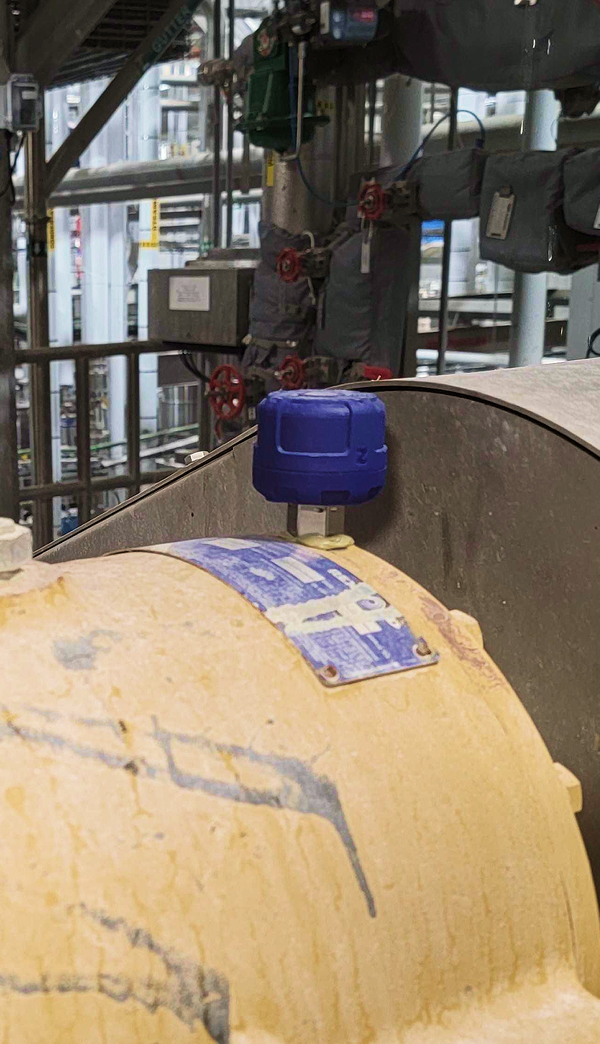
Capture multiple signals with one sensor
Vibration, temperature, and magnetic flux give AI the context to distinguish electrical faults from mechanical ones, while endpoint roaming keeps data flowing over the strongest available connection, even when network conditions change.Learn more -

Human-validated diagnostics
For critical assets, CAT II and III vibration analysts review AI findings before they reach your team, adding human validation to every critical alert.Learn more -

AI-assisted reliability investigations
Reliability Agent compresses diagnosis time from hours to minutes, returning root cause summaries, recommended actions, and draft work orders.Learn more -

Connected to your maintenance workflow
Augury connects with CMMS, EAM, and other systems so machine health findings can move into the workflows your planners already use.Learn more
“We have seen a lot of what I would call cost avoidance. We’re up over $600,000. But honestly, that’s not the true measure of success for me. When I look at the hours of downtime avoided — over 400 hours to date, across 150 assets, in just a matter of three or four years — that’s where the real wins come.”

FAQs
-
Critical rotating assets can be monitored through route-based vibration analysis, continuous wireless or wired sensors, oil analysis, infrared thermography, and ultrasound testing. The right combination depends on the equipment’s failure modes, operating conditions, and criticality. Continuous monitoring provides visibility between scheduled inspections, while complementary methods help assess specific issues.
-
To identify which assets are critical for your business, an asset criticality ranking tool or site survey can help to ensure you have the right criticality assigned to each machine. Assess the consequences of failure for production, safety, quality, and costs, factoring in backup equipment and recovery time. These ratings help you prioritize monitoring and maintenance for the assets that matter most to your operation.
-
Tools for effective critical asset management include continuous condition monitoring, predictive diagnostics, AI agents, and maintenance management systems. For example a Reliability Expert combines continuous monitoring with AI diagnostics and certified analyst review to identify developing electrical and mechanical faults and recommend corrective actions. A Reliability Agent supports investigations and drafts work orders, while integrations with CMMS and EAM platforms help teams bring those recommendations into their maintenance workflows.
-
Best practices for monitoring critical assets include prioritizing equipment by criticality, establishing normal operating baselines, and combining monitoring methods to detect developing faults. Pair monitoring with reliable diagnostics and clear maintenance recommendations, then connect findings to your team’s planning and work-order processes. Track repair outcomes to confirm that maintenance resolved the issue. This Condition-Based Maintenance Guide explains how to put these practices into action, from selecting a complete monitoring solution to building adoption and measuring results.