
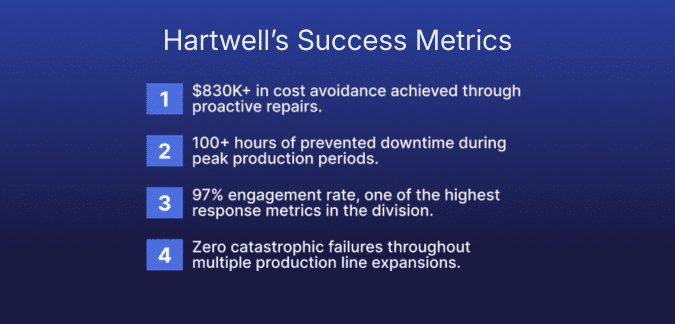
$830K+ in costs avoided. 100+ hours of downtime prevented. 97% team response rate. When rapid growth outpaced maintenance processes at Nestlé Purina’s Hartwell facility, Christopher Rothell didn’t just fix machines: he built the division’s blueprint for predictive success.
In the world of manufacturing, rapid growth is a good problem to have, but it is still a problem.
For the Nestlé Purina facility in Hartwell, Georgia, keeping up with the demand for wet pet food meant constant expansion. But as new production lines were added, the facility’s maintenance program began to stretch thin. Without a dedicated owner to manage the transition, fundamentals like battery health and alarm triage fell through the cracks.
When Senior Staff Reliability Engineer Christopher Rothell stepped in, he found a program that had been outpaced by the sheer speed of the plant’s expansion.
“It was overwhelming in the beginning,” Rothell says, noting that the team needed to double their monitored assets from 90 to 180 while in the middle of active construction. The technology was providing data, but the firefighting culture of a growing plant meant nobody had the time to listen.
The “Aha” Moment on the Factory Floor
Rothell, a veteran with 30 years of hands-on maintenance experience, knew that trust isn’t built in a boardroom. It’s built on the floor.
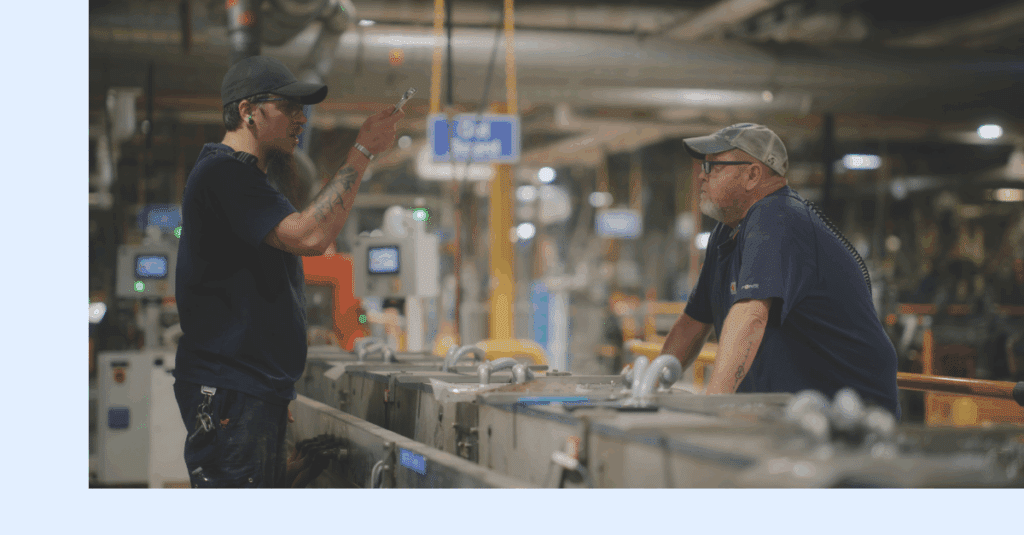
The turning point came when a critical asset triggered a high-level alarm. Rather than sending a digital report, Rothell walked the maintenance supervisor directly to the machine. They stood together and felt the intense vibration of a motor on the edge of failure.
Had that machine stayed online, it would have resulted in eight hours of downtime and $117,000 in lost production. By catching it early, they transformed a potential catastrophe into a simple, planned repair.
“I think people started really buying in after that point,” Rothell recalls, “because we could show them some results from what we were seeing”.
Turning Alerts into Ownership
To move from a reactive state to a proactive one, Rothell shifted the focus from the software to the people. He worked with coordinators to set up personal phone alerts for the specific equipment they managed.
This small change created a sense of ownership over the machinery. When a coordinator received a text and caught a problem before it stopped a line, they weren’t just following a mandate. They were the hero who saved the shift.
Rothell reinforced this by tracking every win. From February 2024 onward, he documented the costs they avoided and the production hours saved. He shared those stats directly with the technicians. By quantifying their impact, he turned the skepticism into advocacy.
A Blueprint for the Network
Hartwell’s transformation was so thorough that they reduced active alarms from over 30 to single digits before they ever agreed to double their monitoring coverage. They proved the model worked on a small scale, earning the right to grow.Today, Hartwell is no longer the facility catching up; it is the “gold standard” that other Purina sites send their teams to study. They are an Augury Spotlight Award winner, ranking in the top 5% of facilities globally.
For Rothell, the real win is the change in the plant’s atmosphere. “Morale has definitely increased,” he says. “Technicians are buying in more… they know it’s something they really need to check out.”
By focusing on process discipline and personal ownership, Hartwell proved that you don’t need more capital investment to get more out of your equipment. You just need to start listening to what it’s already telling you.
Want to replicate Hartwell’s success? Explore our Spotlight Award winners and case studies to see the exact blueprints leading manufacturers use to scale reliability alongside production growth.