
Managing industrial maintenance is challenging. You have to keep equipment reliable while balancing limited time, shifting priorities, and constant production pressure. Creating a preventive maintenance checklist helps bring structure to your daily work, but only when it reflects how your plant actually operates and where risk shows up first.
In this guide, you’ll learn how to build and refine a machine maintenance checklist that prioritizes the right assets and focuses on high-impact activities. You’ll also see how condition monitoring and AI-based insights go beyond checklist-driven work by identifying issues earlier and helping you direct effort where it matters most.
Key highlights:
- An industrial preventive maintenance checklist is a document that helps you standardize critical tasks and reduce machine failure risk by focusing maintenance efforts on what most impacts safety, uptime, and production.
- To build an effective machine maintenance checklist, focus on asset criticality, actual failure behavior, and practical constraints such as access windows and production schedules.
- Reliability teams get more value from preventive maintenance when they pair routine checks with 24/7 condition-monitoring technology that allows them to detect issues earlier and plan maintenance with fewer surprises.
- Augury’s Machine Health Solutions take maintenance beyond checklist-based workflows by incorporating continuous asset condition monitoring, AI diagnostics, and system integrations that help teams keep equipment in working order and act on real Machine Health data.
What is a preventive maintenance checklist?
A preventive maintenance checklist is a list of scheduled maintenance tasks that you must perform to keep industrial equipment running safely. Think of it as a roadmap for your team’s daily, weekly, or monthly reliability routines.
As 30% of manufacturers still list “unplanned production downtime” as one of their biggest organizational challenges, a well-designed maintenance inspection checklist can act as your first line of defense against machine disruptions.
What are the benefits of creating an industrial preventive maintenance checklist?
By creating an industrial preventive maintenance checklist, you minimize reactive firefighting and move toward a more stable environment, where fewer emergency calls and “break-in” tasks lead to less stress, better morale, and a schedule your team can actually stick to.
These checklists also create a clear layer of accountability, giving you the trackable metrics you need to base the performance of your plant and equipment. According to Deloitte, poor maintenance strategies can reduce an asset’s overall productive capacity by 5% to 20%. A structured checklist helps teams reduce that risk. Consistent lubrication checks, for example, can catch contamination or under-lubrication before friction forces a machine to slow down.

Most importantly, a preventive maintenance checklist helps you capture and scale your team’s expertise, reducing the reliance on “tribal knowledge” so new associates can get up to speed quickly without needing years of deep domain knowledge.
Keep learning: The hidden costs of reactive maintenance
How do you create a preventive maintenance list?
Creating a preventive maintenance list involves focusing on what actually fails in your operation, prioritizing the tasks that protect uptime, such as critical lubrication, wear components, and known trouble spots, while accounting for real constraints such as machine availability and production schedules.

These four steps can help maintenance and reliability teams build a preventive maintenance checklist that truly moves the needle:
- Prioritize assets by criticality: Start by identifying critical assets based on the impact a failure would have on safety, production, and downtime. This focus helps your preventive maintenance program concentrate effort on equipment that could stop production or introduce unacceptable risk to operations.
- Document specific maintenance tasks per asset: Define preventive maintenance tasks based on observed failure patterns in day-to-day operation, along with essential checks such as lubrication, alignment, and component condition. Technician insight is especially valuable for addressing recurring issues, e.g., those caused by wear and tear.
- Establish route-based or time-based schedules: Set up maintenance work using route-based plans or time-based intervals, depending on the equipment and access available. Clear scheduling makes regular maintenance easier to complete without disrupting production flow.
- Audit and refine based on reliability data: As your team completes work, you assess task outcomes using failure history, access limitations, and completion records. Over time, this approach helps you optimize the timing of repairs or replacements and focus safety checks on the highest-risk areas.
While a maintenance inspection checklist can work as a baseline for your team, scaling preventive efforts usually requires deeper, always-on insight. Manual, routine maintenance workflows don’t always capture signs of equipment degradation as machine condition shifts outside planned inspections. This is where continuous asset condition monitoring adds value, by providing visibility into equipment health between your scheduled intervals.
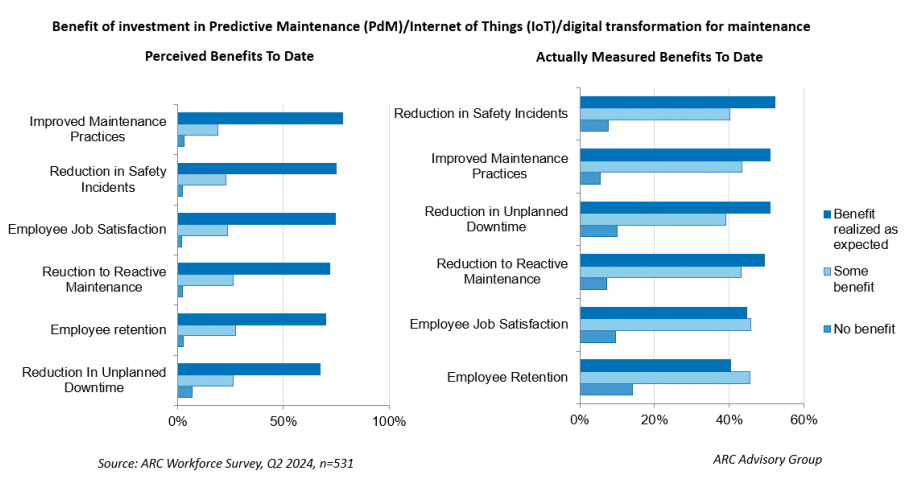
According to an ARC Advisory Group survey, the top reasons organizations invest in advanced asset performance management technologies—including IoT and AI-driven predictive maintenance—are to improve maintenance practices and reduce safety incidents.
Learn the benefits of a predictive maintenance solution.
Sample preventive maintenance checklist for a centrifugal pump
We’ve put together this sample preventive maintenance checklist to help you create your own, using a centrifugal pump as a practical example. Feel free to adapt this sample to your own equipment, operating conditions, and maintenance routines.
| Task description | Frequency | Step-by-step instructions | Pass/fail criteria | Notes |
|---|---|---|---|---|
| Visual inspection | Daily | Inspect pump, motor, baseplate, and surrounding area for leaks, loose hardware, abnormal noise, or visible vibration while running. | No visible leaks, excessive vibration, or abnormal noise. | Note the location of leaks or unusual observations. |
| Inspect the mechanical seal | Weekly | Observe the seal area and the area under the pump during operation for signs of leakage, heat, or abnormal wear. | No visible leakage beyond acceptable limits. | Track recurring seal leakage trends and temperature records. |
| Monitor operating temperature | Weekly | Measure bearing and casing temperatures using a handheld infrared temperature gun or an installed sensor. | Temperature within the OEM-prescribed operating range. | Record readings for trend comparison. |
| Check bearing lubrication | Monthly | Inspect grease fittings, seals, and surrounding areas for contamination; add lubrication as required by the lubrication schedule. Inspect purged grease for signs of contamination. | Grease appears clean; no overheating or noise. | Record lubricant type and volume added. |
| Clean the pump exterior and area | Monthly | Remove dust, debris, and buildup from the pump, motor, and base. | Pump area clean and unobstructed. | Note any oil or process material found in the surrounding area. |
This preventive maintenance checklist reflects how many industries organize their reliability work today, with tasks scheduled at regular intervals. Yet relying only on checklists and not on 24/7 condition-based monitoring technology can lead to inefficiencies, from unnecessary inspections to missed deterioration. By moving to AI-driven prescriptive maintenance, you replace rigid workflows with actions that reflect how your equipment is actually performing.
Augury’s Machine Health Solutions, for example, use IoT sensors to monitor asset condition and turn that data into clear, actionable next steps for your team. With a better view of how a machine is behaving, you can trim back low-value checklist items and focus on tasks based on the current machine condition rather than fixed interventions.
Go beyond preventive maintenance with Augury
An industrial preventive maintenance checklist brings structure to day-to-day work, but it can only take you so far. Because checklists rely on fixed intervals and manual confirmation, they make it harder to catch developing problems before issues start impacting plant uptime.
By continuously monitoring machine condition and applying AI-driven diagnostics, Augury helps you understand what’s happening inside your equipment and what action to take next. At PepsiCo, this approach led to zero unexpected breakdowns on monitored assets during a one-year pilot, eliminating interruptions and unplanned repair costs while keeping production moving.
If you’re ready to move beyond checklist-driven maintenance and see how condition-based insight can improve uptime and reliability, get a demo to explore how Augury supports smarter maintenance decisions.

Frequently asked questions
How do I prioritize assets for an industrial preventive maintenance checklist?
When building your industrial preventive maintenance checklist, prioritize assets by understanding which equipment failures would create the greatest impact on your operation. A criticality assessment helps you evaluate risk based on factors such as:
- Impact of asset failure on safety, environmental risk, and regulatory compliance
- Effect on production throughput, quality, and downtime
- Repair complexity, replacement cost, and spare part availability
- Frequency and history of failures or performance degradation
This approach prevents teams from spreading time evenly across all equipment and instead aligns maintenance priorities with real business risk.
What are the key components of a machine maintenance checklist for rotating equipment?
Effective preventive maintenance for rotating equipment, such as pumps, motors, fans, and compressors, depends on closely monitoring machines, as even small mechanical changes can escalate at operating speed, directly affecting your factory’s throughput and safety.
When creating a machine maintenance checklist for rotating equipment, you should verify:
- Lubrication condition and intervals appropriate to load, speed, and environment
- Vibration, noise, and temperature indicators that signal developing issues
- Alignment, balance, and mounting condition
- Seals, bearings, and other wear-prone components
How does Augury’s Machine Health Solutions go beyond a traditional preventive maintenance checklist?
A preventive maintenance checklist helps standardize routine work, but it’s largely task-driven and time-based. Augury’s solutions for Production Health add context by combining continuous condition monitoring, AI diagnostics, and reliability expertise to explain what’s happening, why it’s happening, and what to do next.
Augury integrates with existing CMMS and EAM systems, connecting Machine Health findings directly to your planning and execution workflows. By tying diagnostics and recommendations into the tools your team already uses, Augury helps ensure equipment stays in working order while reducing manual handoffs and improving follow-through.
Get to know our complete list of partners and integrations.